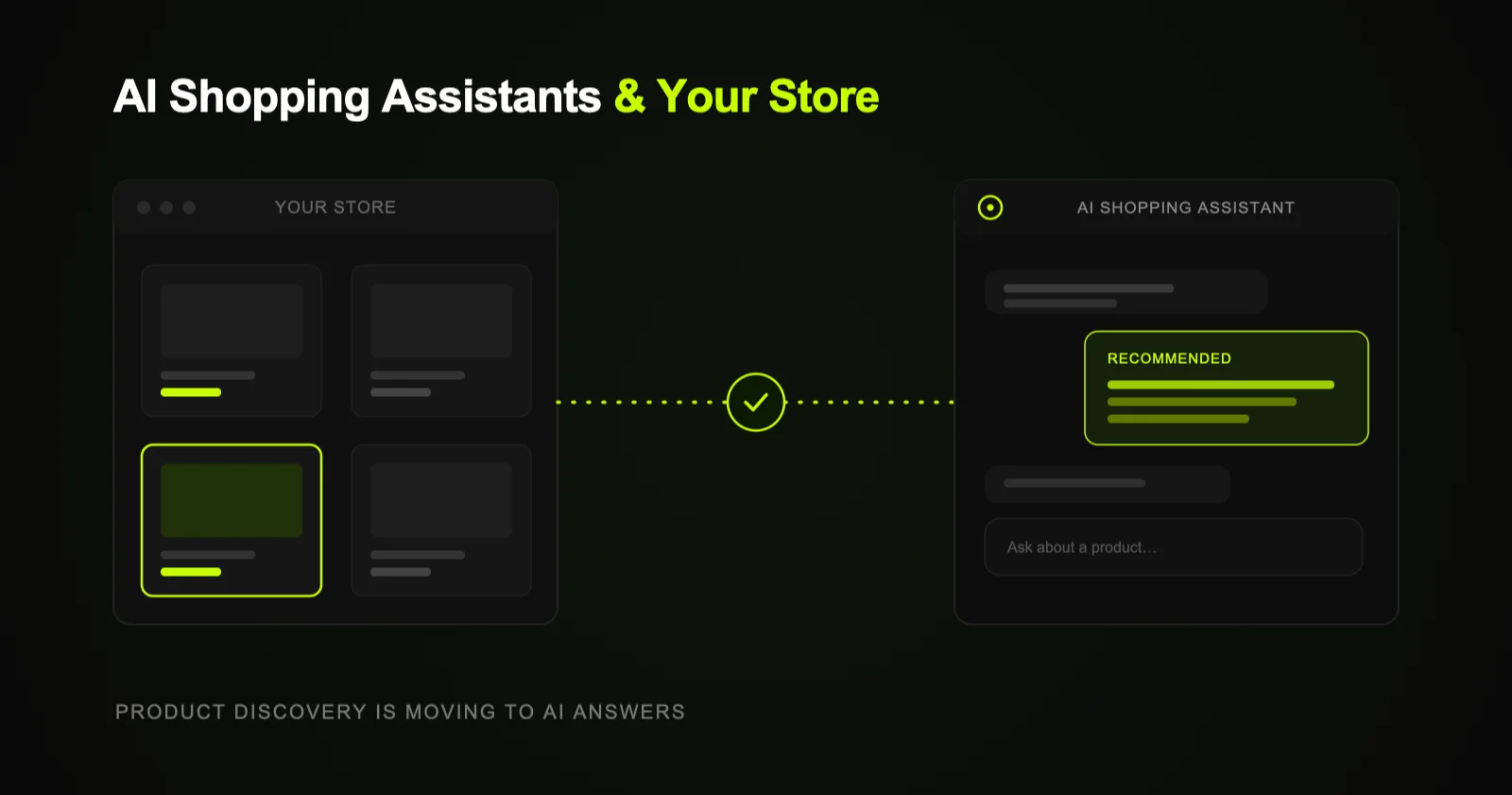
AI shopping assistants won't kill ecommerce traffic outright, but they will reshape it. Assistants like ChatGPT and Google AI Overviews absorb research and discovery queries, so generic informational visits shrink. Stores that earn citations in AI answers and rank for specific buying intent keep — and often grow — their most qualified traffic.
Every few months a new headline declares ecommerce dead: first it was Amazon, then social commerce, now AI shopping assistants. The fear is understandable. If a shopper asks ChatGPT "what's the best lightweight rain jacket under $150?" and gets a confident answer without ever visiting a store, where does that leave your product pages?
The honest answer is more nuanced than "AI will kill your traffic" — and more useful. Let's separate the real risk from the panic.
What "AI shopping assistants" actually are
The term covers a few overlapping things: conversational assistants like ChatGPT and Gemini that answer product questions, Google AI Overviews that summarize answers above the classic results, and Perplexity-style answer engines that cite sources. They all do the same core job — they read the web, synthesize an answer, and hand the shopper a shortlist instead of ten blue links.
That shifts the moment of discovery away from your site and into the assistant. The question isn't whether this happens — it already is — but what kind of traffic it actually affects.
The real risk: fewer clicks, not zero
The traffic most exposed to AI assistants is top-of-funnel, informational: "what's the difference between X and Y," "best budget options for…," "is product type Z worth it." Shoppers used to land on a blog post or category page to research; now the assistant answers in place. That's the zero-click reality, and ecommerce blogs that exist only for traffic will feel it first.
What's far less exposed: specific, high-intent, transactional demand. When someone already knows the product, wants to compare exact specs, check stock, read real reviews, or buy, they still click through. AI assistants are good at narrowing a choice — they're not where the purchase, the cart, or the trust-building happens.
The shift in one line: AI assistants compress the research stage and forward only the shortlist. If your store isn't on that shortlist, you never get the click — so the game becomes earning a place in the answer, not just ranking below it.
Who loses — and who actually wins
Who loses: stores relying on thin, duplicate product content (the same manufacturer description as everyone else), unknown brands with no entity footprint, and content built purely to capture informational clicks. AI has no reason to cite an interchangeable page.
Who wins: brands that AI can confidently understand and quote — stores with unique product content, valid product and review schema, genuine reviews, comparison and round-up content, and a recognizable brand identity. For them, AI assistants become a new referral surface, sending pre-qualified shoppers who've already been told "this brand is a good fit."
What to do now: 5 moves
- Become an entity, not just a store. Make sure your brand is consistently described across your site, profiles, and the web so AI recognizes who you are and what you sell.
- Make products quotable. Write unique, specific product and collection content with the details AI needs to recommend you — use cases, who it's for, comparisons, and FAQs.
- Ship clean structured data. Valid Product, Offer, Review, and AggregateRating schema makes your products machine-readable. See technical SEO for the foundation.
- Earn review and citation signals. Real reviews and mentions on trusted sources are what assistants lean on to decide who to recommend.
- Create comparison and round-up content. "Best X for Y" formats are exactly what assistants summarize — being the source they pull from beats being the page they skip. The full playbook is in how to get your products recommended by ChatGPT and AI Overviews.
How product discovery is shifting
flowchart TD
    S([Shopper has a need]) --> Q{Where they ask}
    Q -->|Old way| G[Search → browse
    several stores]
    Q -->|New way| AI[AI assistant
    gives a shortlist]
    G --> SITE1[Many clicks,
    lots of research]
    AI --> CITE{Is your store
    in the answer?}
    CITE -->|Cited| SITE2[Pre-qualified
    click & buy]
    CITE -->|Not cited| LOST([Invisible —
    no click])
    style S fill:#111,stroke:#C8FF00,color:#E8E8E8
    style AI fill:#1a1a1a,stroke:#C8FF00,color:#E8E8E8
    style SITE2 fill:#1a2800,stroke:#C8FF00,color:#C8FF00
    style LOST fill:#1a1a1a,stroke:#555,color:#888
    style CITE fill:#111,stroke:#C8FF00,color:#E8E8E8
The bottom line
AI shopping assistants won't end ecommerce — but they will reward stores that are easy to understand, trust, and quote, and quietly starve the ones that aren't. The brands panicking about lost clicks are usually the ones with interchangeable content; the brands investing in entity, schema, and genuinely useful product information are turning AI search into a new channel. If you want a store-specific plan for staying visible as discovery shifts, that's what Shopify SEO and AI SEO services are built to deliver.